
For decades, success was measured by accumulation – more clothes, more furniture, more of everything. A full closet was proof of ambition, a packed calendar proof of relevance. But somewhere along the way, abundance began to feel suffocating. The noise of “more” drowned out the quiet of enough.
Now, a new generation is redefining luxury – not by what they own, but by what they choose to live without. Welcome to the age of minimalism, where beauty lives in clarity, and simplicity has become the most sophisticated form of comfort.
The Quiet Revolution of Less
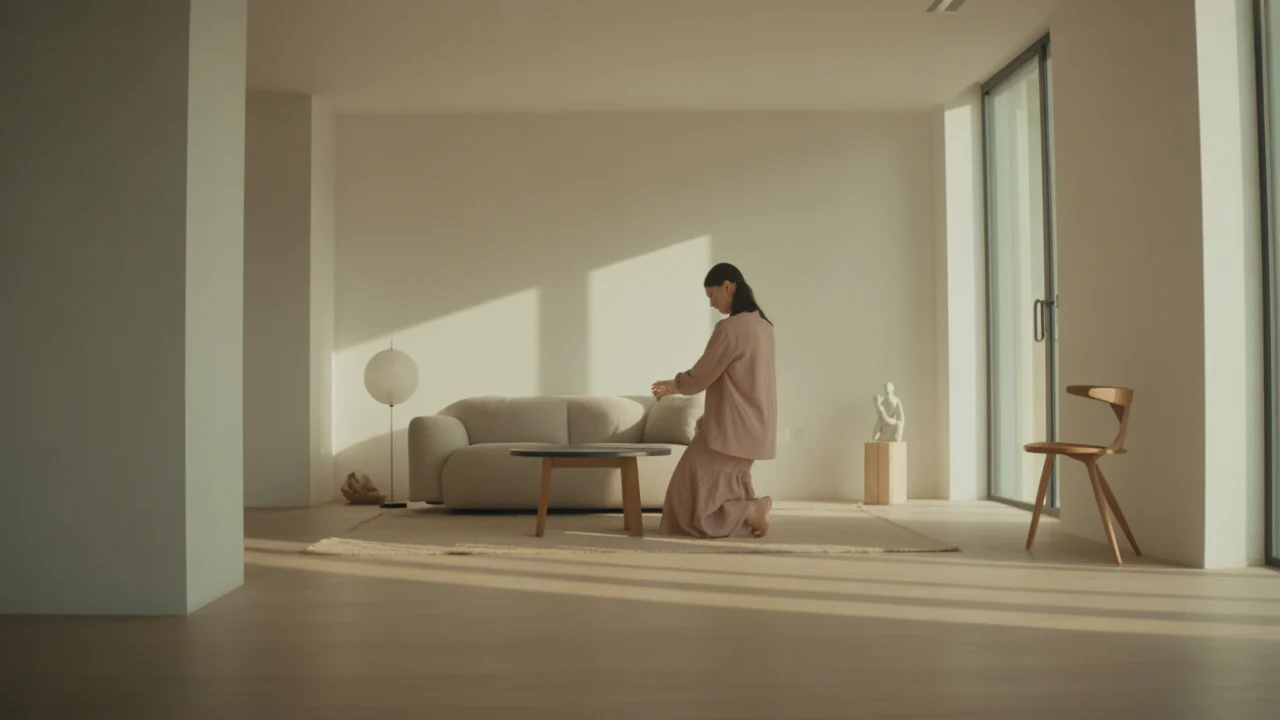
Minimalism isn’t about stark white walls or empty shelves – it’s about intentional living. It’s the practice of surrounding yourself only with what adds genuine value: the objects that serve, the spaces that breathe, and the habits that sustain.
“When you strip away the excess, you don’t lose – you uncover,” says Sofia Navarro, an interior designer known for her ‘functional serenity’ aesthetic. “Minimalism isn’t about emptiness. It’s about focus – creating space for what truly matters.”
Psychologists agree. Studies show that clutter increases cortisol, the stress hormone, while organized, open spaces promote calm, creativity, and better sleep. Your environment mirrors your mind – when one is chaotic, the other follows.
In this sense, minimalism isn’t decoration; it’s self-care.
From Consumption to Consciousness
The minimalist mindset extends far beyond home design. It’s a quiet resistance against the culture of consumption. We live in an era where trends expire faster than they arrive. We refresh, replace, repeat – a cycle that promises satisfaction but delivers fatigue.
“Every item you own asks for attention,” Navarro explains. “The more you have, the more mental space you lose.” Minimalism restores that space. It replaces impulse with intention, possession with appreciation.
When you buy less, you begin to buy better. Quality over quantity becomes more than a phrase – it becomes a philosophy. The linen shirt that lasts years, the handmade cup that feels perfect in your hand, the empty table that invites stillness – these are not voids but quiet luxuries.
The Emotional Weight of Things
We rarely realize how emotionally heavy our belongings can be. Each object carries a story – a memory, an identity, a sense of “should.” But holding on too tightly can trap us in outdated versions of ourselves.
Decluttering, then, is more than organization – it’s emotional release. “When I help clients clear space, they often cry,” says Dr. Amira Chen, a psychologist specializing in behavioral patterns. “They’re not mourning the objects – they’re processing what those objects represented: guilt, nostalgia, identity. Letting go of things often means letting go of self-expectations.”
This process, though tender, is profoundly freeing. You discover that peace isn’t hidden in possessions – it’s found in the space between them.
The Beauty of Empty Space
Designers are calling it “visual breathing.” Open shelves, natural light, neutral tones – a soft minimalism that feels warm rather than cold. It’s about creating homes that exhale – spaces that invite presence instead of distraction.
“Minimalism today isn’t sterile; it’s sensual,” Navarro says. “It’s linen curtains that move with the breeze, handmade ceramics, imperfect textures. It’s about reducing noise, not warmth.”
The best interiors are now guided by emotion, not ego. Every detail serves a purpose – and that purpose is peace.
Minimalism as a Lifestyle Choice
Beyond interiors, minimalism seeps into how we eat, work, and even relate to others. Simplifying your digital space – unsubscribing, deleting, unfollowing – declutters the mind just as powerfully as cleaning a room. Choosing slow mornings over chaotic multitasking becomes a quiet rebellion against the cult of busyness.
Minimalism, at its essence, is about reclaiming attention – the most valuable currency of modern life.
“Attention is what turns a meal into a ritual, a home into a sanctuary, a moment into a memory,” Dr. Chen says. “When you stop scattering it, everything deepens.”
How to Begin: Small Steps, Profound Shifts
- Start with one drawer. Decluttering isn’t an event – it’s a practice. Begin small, and let momentum grow.
- Ask the essential question: Does this add value to my life – or noise?
- Design for calm, not perfection. Minimalism isn’t a Pinterest board; it’s a feeling of ease when you walk into a room.
- Limit incoming clutter. Every new purchase should earn its place – not just by style, but by purpose.
- Celebrate space. An empty corner can be as inspiring as a piece of art.
The goal isn’t to own less – it’s to live more clearly.
Less, but Deeper
In 2025, the new status symbol isn’t accumulation – it’s peace of mind. Minimalism isn’t about rejection; it’s about refinement. It’s not about what’s missing – it’s about what remains: clarity, focus, beauty.
As Navarro puts it, “When you remove the unnecessary, what’s left isn’t emptiness – it’s meaning.”
Because the real luxury of modern life isn’t more – it’s enough.