
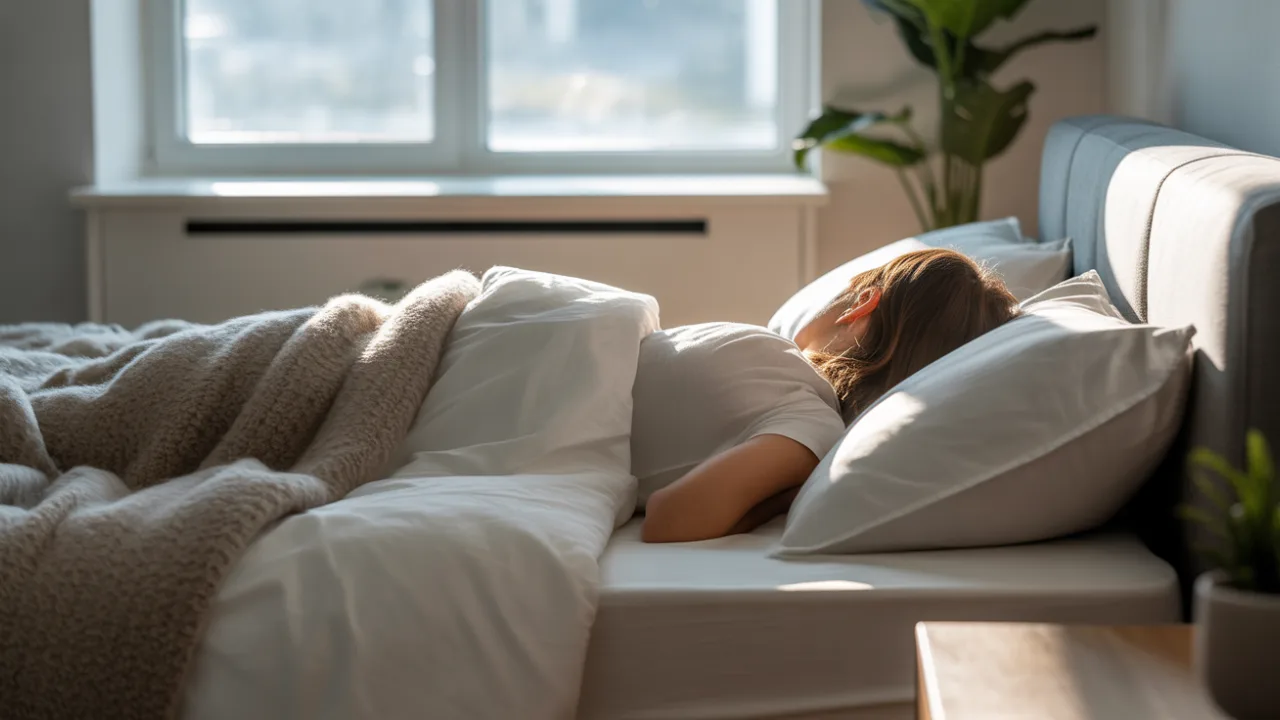
There was a time when sleep was treated as expendable – a luxury for the lazy, a weakness for the ambitious. In the culture of endless hustle, bragging about four hours of rest was a twisted badge of honor. But in 2025, the paradigm has shifted. Today, sleep isn’t a sign of indulgence – it’s a symbol of self-awareness, intelligence, and modern success. The new elite don’t flaunt exhaustion; they flaunt recovery.
Sleep has become the ultimate currency in a world that’s constantly awake.
The Age of the Sleeper
“Sleep is no longer passive,” says Dr. Elise Moreau, a neuroscientist and chronobiology researcher at the European Sleep Institute, whom we invited to co-analyze the science behind this cultural turn. “It’s the most active form of healing your body knows. While you rest, your brain reorganizes memories, repairs cells, balances hormones, and resets emotional stability. You’re not doing nothing – you’re doing everything that keeps you alive.”
In her lab, Dr. Moreau studies how the brain’s glymphatic system flushes out toxins during deep sleep – including beta-amyloid, a protein linked to Alzheimer’s disease. “Think of it as your brain’s nightly detox,” she says. “Without it, mental clarity fades, mood deteriorates, and creativity drops.”
For the first time, the science and the culture are perfectly aligned: sleep is no longer an afterthought – it’s a form of status, performance, and power.
The Sleep Economy: Where Science Meets Style
This awakening has fueled an entire industry devoted to rest as refinement. Luxury brands are designing “sleepwear” that functions like lab-tested recovery gear: temperature-regulating fabrics, silver-infused fibers that fight bacteria, and silk eye masks lined with copper for skin renewal.
Boutique hotels now employ “sleep concierges,” curating pillow menus and melatonin teas. At wellness resorts in the Swiss Alps and Bali, guests attend sleep retreats that combine cognitive-behavioral therapy, circadian light therapy, and nutritional optimization – all guided by physicians, not influencers.
Even the tech world is catching on. Smart rings and sleep trackers measure REM cycles and heart-rate variability, transforming bedtime into data. Dr. Moreau calls this “the rise of sleep intelligence.” “We used to talk about IQ and EQ,” she says. “Now, we talk about SQ – Sleep Quotient – the measure of how well your body restores itself overnight. It’s the foundation of every other form of intelligence.”
Designing for Deep Rest
At home, the bedroom is evolving into a sensorial sanctuary. Designers and scientists are collaborating to engineer rest as an experience: circadian lighting systems that mimic sunset tones, soundscapes tuned to delta brainwaves, and air-purifying plants that subtly release oxygen at night.
“Environment is everything,” Dr. Moreau notes. “Light exposure, temperature, and noise directly influence melatonin levels. Even a few minutes of screen time before bed can delay your biological clock by hours.”
The new luxury isn’t a high thread count – it’s quiet, darkness, and consistency. And increasingly, it’s personalized: AI-driven sleep pods now adjust air temperature to your breathing rhythm, while biometric bedding senses when you turn and recalibrates support in real time.
The Psychology of Rest
Culturally, we are witnessing a profound psychological reorientation. After a decade of hustle and hyperconnectivity, sleep has become the new form of rebellion – an act of self-respect in a world that glorifies exhaustion.
Fashion has caught the wave too. “Dreamcore” aesthetics – soft textures, pastel palettes, oversized knits – mirror our collective craving for calm. Social media, once a source of sleepless anxiety, now romanticizes rest: candle-lit night routines, slow mornings, linen sheets drenched in morning light.
“Sleep is becoming emotional currency,” Dr. Moreau observes. “It’s a way of saying, ‘I have boundaries. I value recovery as much as productivity.’ That’s a profound cultural shift.”
Science, Simplified: How to Sleep Like a Researcher
Dr. Moreau distills years of laboratory findings into five principles that define true sleep luxury:
- Consistency over duration. Going to bed at the same time every night synchronizes your circadian rhythm – your body’s internal clock.
- Darkness is medicine. Even minimal light exposure suppresses melatonin, the hormone of sleep. Dim your screens, draw your curtains, and let darkness heal you.
- Cool down. The ideal sleep temperature is 18-19°C (65°F). Your core body temperature must drop slightly for deep sleep to begin.
- Digital boundaries. Blue light isn’t the only problem; notifications keep the brain in alert mode. Turn your phone into “flight mode for the mind.”
- Mindful decompression. Gentle stretching, breathwork, or journaling before bed signal safety to your nervous system. Sleep starts before you close your eyes.
“Luxury,” she adds with a smile, “is eight hours of peace – not possessions.”
Rest Is the New Power
In 2025, rest has become the truest mark of success. Celebrities and CEOs alike credit restorative sleep for their focus, beauty, and longevity. The new icons of influence are those who glow with rested energy – their faces lit not by screens, but by circadian harmony.
This merging of neuroscience and culture signals a new era: one where calmness is charisma, and quality rest is the purest form of self-expression.
As Dr. Moreau concludes, “Sleep isn’t the opposite of productivity – it’s the origin of it. When you protect your rest, you protect your mind, your creativity, and your future.”
So if you want to join the new generation of achievers, forget the red-eye flights and 3 a.m. emails. Close your eyes. The next revolution starts in your dreams.