
By 2030, the world will look nothing like today’s. The boundary between human and machine, physical and digital, will blur into something altogether new – a living network of intelligence, automation, and design. The next five years aren’t just an era of innovation; they are the threshold of transformation.
The technologies emerging now are not just tools; they are forces of evolution – rewriting economies, identities, and even biology itself. From artificial intelligence that anticipates our needs to energy systems that rewrite the planet’s fate, here are the five breakthroughs shaping the decade ahead.
1. Artificial Intelligence Becomes an Ecosystem – Not a Tool
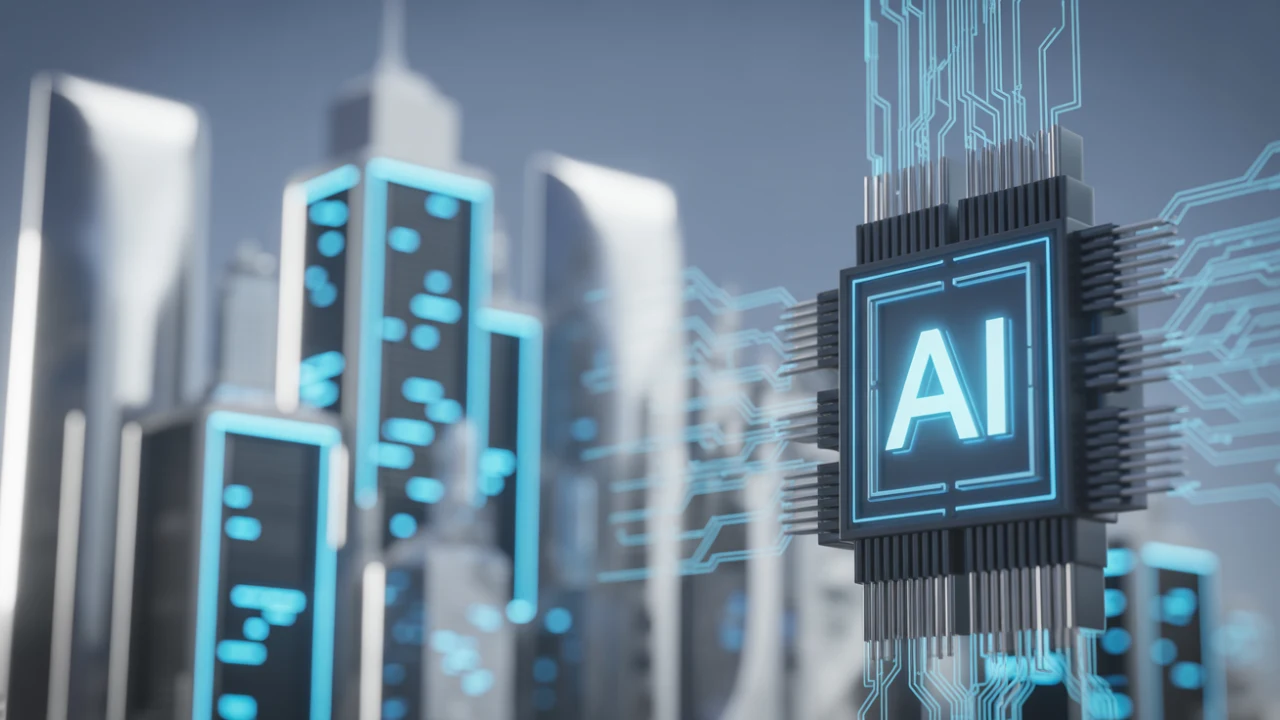
By 2030, AI will no longer be a “feature” of technology; it will be technology. What began as chatbots and recommendation engines is evolving into adaptive intelligence ecosystems – invisible, interconnected networks that learn, reason, and collaborate across platforms.
The future will not be powered by a single AI, but by swarms of specialized agents: one managing your calendar, another trading your energy credits, another optimizing your health. In the workplace, AI will design workflows, predict burnout, and generate strategies faster than any analyst.
But the real shift is philosophical: the age of control gives way to co-creation. Humans will stop programming machines – we’ll start mentoring them. The new literacy of the decade won’t be code; it will be prompt design, empathy, and ethics.
2. Quantum Computing: From Impossible to Inevitable
If classical computers are calculators, quantum computers are time machines for data. By harnessing the power of quantum bits (qubits), they can process information in parallel universes of probability – performing in seconds what would take today’s supercomputers millennia.
By 2030, quantum computing will move out of the laboratory and into real-world applications: cracking molecular simulations for drug design, modeling climate systems, and optimizing global supply chains.
The implications are seismic. Medicine will advance at exponential speed, materials science will leap decades ahead, and cryptography as we know it will dissolve – forcing the birth of quantum-safe cybersecurity. The next Cold War won’t be fought with weapons, but with qubits.
3. Biotechnology and the Age of Engineered Life
The fusion of biology and technology will be the defining revolution of the 2030s. CRISPR gene editing, synthetic organs, and bio-printed tissues are moving from science fiction to clinical reality. Humanity is learning not just to heal itself, but to upgrade itself.
Imagine stem-cell patches that regenerate heart tissue, or gene therapies that eliminate inherited diseases before birth. In sports, biology will become performance technology. In nutrition, DNA-personalized diets will tailor metabolism to molecular precision.
Yet the ethical questions are as profound as the medical potential. Who gets access to enhancement? How much modification makes a human post-human? As biology becomes editable, identity itself enters open beta.
4. Clean Energy 2.0 – Powering a Planet Without Carbon
The 2020s began the race; the 2030s will finish it. The energy revolution is accelerating from policy to physics. Solar, wind, and hydrogen are no longer alternatives – they are becoming the default infrastructure.
By 2030, we’ll see the first generation of fusion energy prototypes reaching net-positive output – a breakthrough that could redefine global geopolitics. Cities will run on microgrids; homes will generate and trade their own electricity. Batteries will store power for months, not hours.
Meanwhile, carbon capture will evolve into carbon transformation, turning emissions into construction materials, fuels, and fabrics. Energy independence will no longer be a luxury – it will be a human right.
5. The Metaverse Evolves into the Spatial Web
Forget headsets and avatars. By 2030, the metaverse will mature into what futurists call the spatial web – a seamless merger of the digital and physical worlds, accessible through lightweight AR wearables, smart contact lenses, or even neural interfaces.
The spatial web will make screens obsolete. Information will be woven into the environment: street signs that update in real time, mirrors that give you biometric feedback, homes that adapt to your mood. Work, learning, and commerce will unfold in three dimensions – data finally gaining depth.
In this future, design becomes a language of experience. Architects, fashion designers, and coders will collaborate to create “living environments” – spaces that sense, learn, and respond. Reality itself becomes the next platform.
The Decade of Convergence
Each of these innovations – AI, quantum computing, biotechnology, clean energy, and the spatial web – is powerful on its own. But their true potential lies in convergence.
Imagine an AI designing a new gene therapy, simulated on a quantum processor, delivered by a biotech company powered by fusion energy, inside a world experienced through augmented reality. That’s not 2050 – that’s the logical outcome of 2030’s exponential decade.
The lines separating disciplines, industries, and even species are dissolving. What emerges is not a world of machines or humans, but a hybrid civilization – intelligent, interconnected, and alive.
Rewriting the Definition of Progress
The technologies of 2030 won’t simply change what we can do – they’ll change what we value. Progress will be measured not by speed or scale, but by sustainability, ethics, and empathy. The next industrial revolution won’t be built on steel or silicon, but on conscious innovation – inventions that heal, connect, and evolve with us.
The future is no longer something we enter; it’s something we engineer.
By 2030, technology won’t just shape our tools – it will shape our humanity.